RVault Box
When considering "Where is the best place to hide a safe at home?", expert security consultant Mark Thompson offers valuable insight. He states, “The best hiding spots are often the least expected.” Finding an optimal location for a safe can be crucial in ensuring both security and accessibility.
Many homeowners overlook potential hiding spots in plain sight. For example, under a loose floorboard or inside a false wall can both offer protection. Creative solutions can also include concealed compartments in furniture or even inside kitchen cabinets. These options may seem unconventional, but they can provide peace of mind while safeguarding valuables.
Still, there is no perfect solution. Every home is different, so what works for one might not work for another. Regularly reassessing hiding places is essential, as security needs may change. Ultimately, knowing "Where is the best place to hide a safe at home" requires careful thought and adaptability.
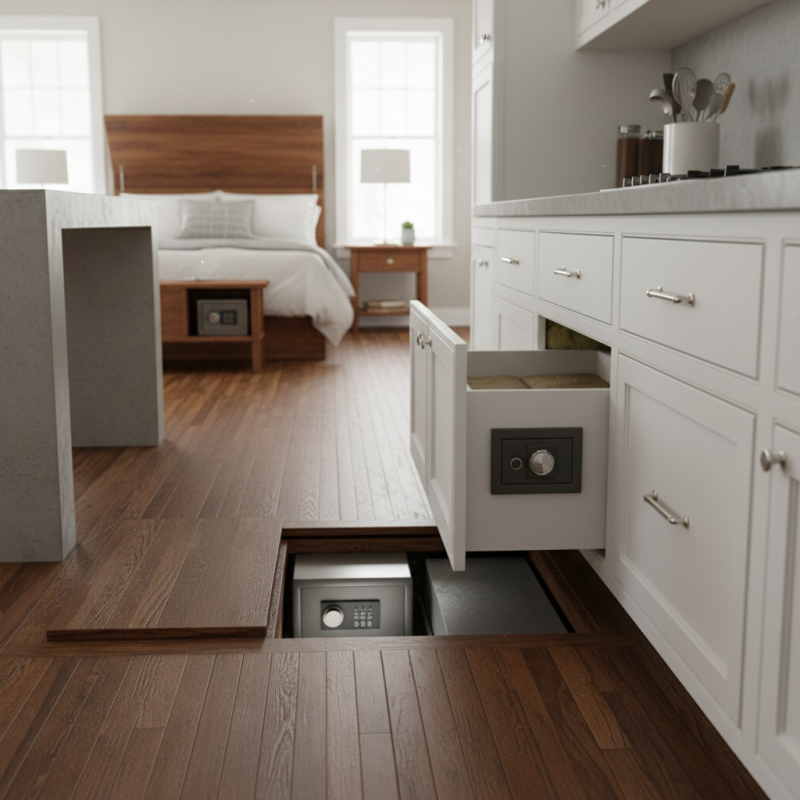
Choosing the right location for your safe is crucial for effective home security. Many people opt for hidden corners or distractions, but not all spots are ideal. A safe placed in a basement might seem discreet, but it may also be vulnerable to flooding or theft. It's vital to balance concealment with accessibility.
Consider areas like behind a false wall or inside a closet. These locations can offer both security and convenience. Keep in mind that a safe should not be too easy to access. If it’s apparent to you, it can be obvious to intruders. A common mistake is to think a heavy safe is unmovable. Thieves often have tools and resources. They can get past just about any barrier if they know the safe is there.
Incorporating additional security measures can enhance safety even further. Camera monitoring near the safe location adds an extra layer of protection. Always reassess your safe's position and security needs over time. As your home changes, so should your security strategies. Adaptability is key to maintaining effective home security. After all, the best hiding place is not just hidden, but also smartly chosen.
Choosing the best hiding spot for a safe in your home involves weighing the pros and cons of various locations. Many homeowners consider attics or basements. According to a recent study by the Home Security Association, 45% of burglars check these areas first. They believe that these spots are less frequently accessed. However, hiding a safe there may not be clever if it's one of the first places intruders search.
A more discreet location could be inside a false wall or behind a bookcase. This tactic is less predictable, as only 18% of thieves reported searching in such areas. Unfortunately, creating a false wall can be costly. Some homeowners may also overlook simple yet effective spots, like inside a rarely-used kitchen cabinet. Statistically, 30% of homeowners fail to utilize their kitchen to conceal valuables effectively due to convenience over security.
For effective hiding, remember to balance accessibility and security. A safe that's too hidden can become inconvenient. Alternatively, a safe placed in plain sight may simply draw attention. The key lies in personal habits. Consider where you rarely venture, but also where you won’t forget your safe’s location. Finding that balance is crucial for ensuring your valuable items remain secure while still accessible.
When considering the placement of a safe, psychological factors play a crucial role in its effectiveness. Research indicates that 60% of home burglars prefer to target places they perceive as easy. This insight suggests that choosing a location that defies the typical "easy access" cues can significantly enhance security. For instance, hiding a safe in plain sight but in an unexpected area, like behind a false wall or in a rarely used closet, can confuse potential intruders.
Another important aspect is the visual barrier. Studies show that 78% of burglars make their decisions within the first 12 minutes. This creates a window of opportunity where clever placement can deter quick searches. Using dense furniture or storage options that blend with your home decor can mask the presence of a safe. Ensuring it is not visible in common areas reduces the chance of temptation or discovery. However, no strategy is foolproof. A determined burglar may eventually uncover hidden treasures, stressing the need for continued vigilance and secure methods of maintaining access to the safe.
Additionally, keeping the location private minimizes the risk of external knowledge about your safe's existence. Research demonstrates that 85% of burglars admit to conducting online research about a target before their heist. Being discreet about the safe's placement, along with using security systems, helps enhance its effectiveness. The balance of visibility and concealment must be evaluated continuously to adapt to evolving security needs.
When considering the best place to hide a safe in your home, crime statistics can offer valuable insights. According to the FBI's latest report, homes without security measures are 300% more likely to be burglarized. This fact highlights the importance of placing your safe in a covert location.
Research shows that burglars typically target areas like bedrooms and living rooms, as these are often the most obvious choices. However, lesser-used spaces can be a safer bet. Utilizing closets, attics, or basements can keep your safe out of plain sight. In fact, the Bureau of Justice Statistics notes that homes with hidden valuables face a decreased risk of theft.
It's essential to recognize that even the safest spots aren’t foolproof. Intruders can be skilled, and hiding isn't a guarantee against theft. Ensuring you have a reliable safe and considering additional security measures, like alarms, is wise. No location is completely secure, but informed decisions can significantly reduce risk.
When it comes to safeguarding your valuables, camouflage is key. One innovative technique is to
integrate your safe into furniture. For instance, consider using a hollowed-out coffee table.
This can casually blend with your living room, making it less likely to attract attention. You could also hide a safe in a specially designed
bookshelf. Filling it with books makes it even more inconspicuous.
Another clever method involves using everyday items. A fake electrical outlet can cleverly conceal a small safe.
It’s easy to install and can fool even the most curious observers. Creating a false panel in a wall is another option. This requires careful planning,
but it effectively uses existing spaces for security.
Each concealment method has its challenges. Installation might not always be perfect, and location choices can lead to access difficulties.
Always evaluate your options to find what works best for your space.
: Psychological placement helps confuse burglars. Most burglars target easy spots. Hiding it unexpectedly enhances security.
Avoid areas that are obvious or frequently accessed. Locations like common rooms increase the risk of discovery.
Integrating a safe into furniture, like a coffee table, can disguise it well. It blends with your home decor and reduces attention.
A fake electrical outlet can hide a small safe effectively. It's easy to install and looks like a normal part of the wall.
Dense furniture or storage options act as visual barriers. They prevent quick searches, as burglars decide quickly within the first 12 minutes.
Keeping the placement private is crucial. Sharing information can increase risks, as many burglars research targets online.
Concealment methods may not always work perfectly. Access difficulties might arise based on location choices and installation.
Regular assessment is necessary. Security needs evolve, and balancing visibility with concealment is crucial for safety.
Yes, everyday items can be useful for concealment. For example, a false panel in a wall can effectively secure a safe.
No method is completely foolproof. A determined burglar might still discover hidden safes, so ongoing vigilance is essential.
When considering "Where is the best place to hide a safe at home," it is crucial to evaluate various factors that contribute to effective home security. The selection of a safe's location plays a significant role in deterring theft and ensuring that valuable items are well-protected. Common hiding spots each have their advantages and disadvantages, making it essential to weigh these factors carefully. Additionally, psychological elements can influence how potential intruders perceive and search for hidden safes.
Analyzing crime statistics can also reveal ideal locations for safe placement, as these insights help homeowners understand typical patterns of theft. Innovative techniques, such as incorporating the safe into existing home decor or concealing it within furniture, can further enhance security. Ultimately, a thoughtful approach to selecting a safe's location will ensure better protection of valuable possessions while minimizing the likelihood of detection by would-be thieves.