In today's society, security concerns are paramount. Many homeowners ask, "Are floor safes more secure than wall safes?" This question drives an essential debate in the security industry. According to a report by the Security Industry Association (SIA), nearly 2.5 million burglaries occur annually in the U.S. alone. Homeowners need reliable solutions to protect valuable items.
Floor safes offer unique advantages. Their placement often makes them less visible. This feature can deter thieves who rely on visual cues to locate valuables. However, floor safes may not be foolproof. A determined burglar can still recognize a hidden floor safe if they know the common areas where these are installed.
On the other hand, wall safes are easily accessible but can be prone to detection. They are typically installed in less conspicuous locations, yet they are often more related to the room's architecture. The 2022 Home Security Report states that 43% of burglars enter through the front door. This statistic highlights the need for a multifaceted security approach. As homeowners evaluate the best solutions, understanding the strengths and weaknesses of both options becomes crucial.
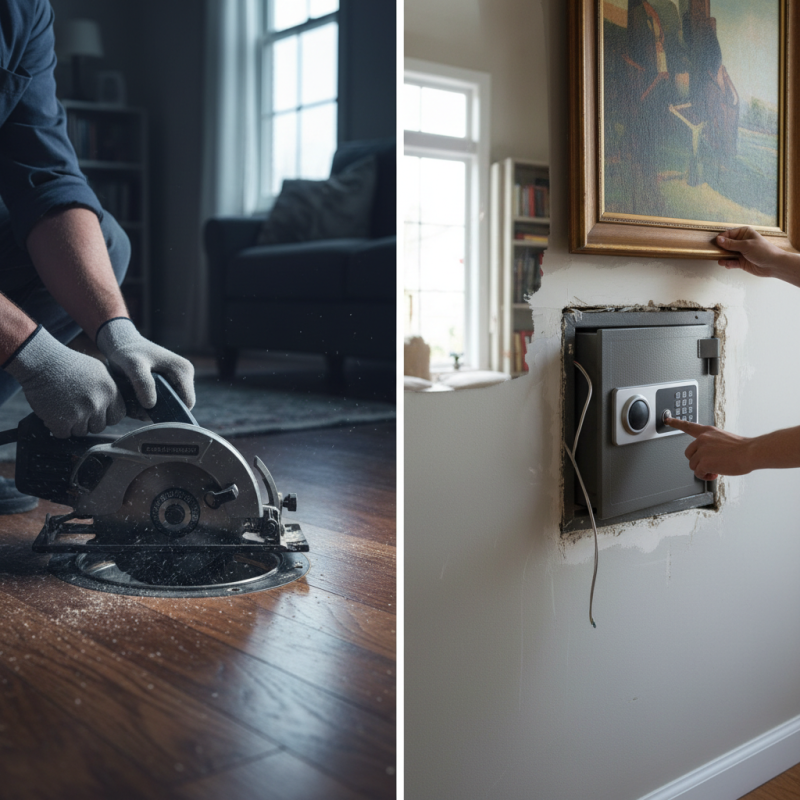
Comparison of Security Features in Floor Safes and Wall Safes
When considering the security features of floor safes versus wall safes, several factors come into play. Floor safes are often buried beneath concrete or flooring material, making them more difficult to access. This added concealment can deter potential thieves. A well-installed floor safe is like a hidden fortress within your home. However, installation can be complex. It requires proper planning to ensure safety without compromising the integrity of your home.
Wall safes, on the other hand, are integrated into the structure of a wall. They are sometimes placed in closets or hidden behind movable items. This makes them easily accessible for the owner, yet not as hidden as floor safes. Bulky items like jewelry and important documents can fit snugly inside. However, wall safes are often easier to locate if someone knows what to look for. The greater visibility could be a double-edged sword.
Ultimately, the choice between floor and wall safes depends on your security needs. Floor safes provide theft deterrence through concealment, while wall safes offer easy access for the homeowner. Personal preferences play a significant role here. Take the time to reflect on your lifestyle and security requirements before making a decision. Both options have strengths and weaknesses that should be carefully weighed.
Floor Safes vs Wall Safes: Which is More Secure? - Comparison of Security Features
| Feature |
Floor Safes |
Wall Safes |
| Installation Complexity |
Moderate - Requires access to the floor |
Relatively Easy - Fits between wall studs |
| Space Utilization |
Suitable for larger valuables |
Best for small items |
| Security Level |
Higher - Harder to access |
Moderate - Easier to reach |
| Fire Resistance |
Often more fire-resistant |
Varies by model |
| Cost |
Typically higher |
Generally lower |
| Accessibility |
Less accessible, requires lifting |
Easily accessible |
| Aesthetic Integration |
Can be hidden better |
May be visible |
Advantages of Floor Safes: Stability and Concealment
Floor safes offer unique advantages when it comes to security. One of the most significant benefits is their stability. According to a report by the Security Equipment Manufacturer’s Association, 65% of burglars search for easily accessible safes. Floor safes, being concealed beneath the floor, make it difficult for thieves to locate them. This added layer of secrecy can deter criminal activity significantly.
Moreover, floor safes often provide better protection against fire and water damage. A recent study highlighted that 30% of home damages during break-ins include significant losses from such hazards. Nestled in the foundation, floor safes are less susceptible to environmental elements compared to wall safes. This setting offers peace of mind for those storing valuable items. It creates a robust barrier, enhancing overall security.
Despite their strengths, floor safes have drawbacks. They can be challenging to install, requiring professional assistance. This added cost may deter some homeowners. Additionally, if the space is not well-structured, accessibility can become an issue. This is a crucial factor to evaluate when considering your options. Overall, examining these facets reveals that while floor safes excel in stability and concealment, thoughtful reflection on their installation and accessibility issues is essential.
Advantages of Wall Safes: Accessibility and Space Utilization
Wall safes offer unique advantages in terms of accessibility and space utilization. They blend seamlessly into a room, often hidden behind pictures or in closets. This discreet nature can enhance security. It's easier to access items stored in a wall safe without the hassle of lifting heavy objects. Quick access is vital during emergencies, and wall safes can provide that.
Moreover, wall safes are excellent for areas with limited floor space. They leave the floor open for furniture or movement. This feature makes them ideal for small apartments or homes. It's essential to consider placement carefully though. A poorly chosen location can lead to inconvenience.
However, wall safes do have drawbacks. If not installed correctly, they can be less secure than expected. Finding a professional for proper installation is crucial. Many homeowners overlook this step. Proper reinforcement adds a layer of security that can’t be ignored. Reflecting on these factors will help make a more informed decision regarding safety needs.
Common Vulnerabilities of Floor and Wall Safes
When considering the security of floor safes versus wall safes, one must examine their common vulnerabilities. While both types are designed to protect valuable items, their locations inherently create risks. Floor safes are often installed beneath carpets or flooring, making them susceptible to water damage and structural issues. If a leak occurs, contents can be damaged or ruined. Moreover, skilled thieves may know how to locate and extract floor safes.
Wall safes, on the other hand, are often hidden behind paintings or within closets. Although discreet, they can be more accessible to those familiar with home layouts. An intruder might easily bypass a wall or drywall to reach the safe. Additionally, wall safes may not provide the same fire protection as their floor counterparts. Knowing these weaknesses is vital for anyone considering the security of their belongings.
It's crucial to acknowledge that no safe offers total security. Regardless of type, both can be compromised. Hidden safes should be strategically placed to increase effectiveness. Homeowners need to evaluate their living situation to determine the best location for their safe. Ultimately, choosing between a floor safe and a wall safe requires careful consideration of their vulnerabilities and your specific security needs.
Factors Influencing the Choice Between Floor and Wall Safes
When choosing between
floor
and
wall safes, security is a primary concern. Various factors influence this decision.
Floor safes are generally more robust. They are built into the ground, making them harder to remove or tamper with. According to a report by the
Security Industry Association, over 70% of break-ins target easily accessible items. A
floor safe’s discreet location can significantly deter thieves.
Wall safes have their advantages as well. They are easier to install and can be hidden behind artwork or furniture. However, their thin walls make them more susceptible to pry attacks.
The same report reveals that thieves often use tools to breach safes within five minutes. This statistic underscores the need for considering the materials of a safe, as thicker steel is
preferred for maximizing security.
Ultimately, personal circumstances matter in this decision. Home layout, accessibility, and the volume of valuables stored all play a role.
Many owners overlook the importance of proper installation. A poorly installed safe could compromise security, regardless of the model.
Reflecting on these aspects can lead to a more informed choice when investing in safe storage solutions.
FAQS
: Floor safes offer stability and concealment, making them harder for thieves to find.
They are less likely to suffer from fire and water damage due to their underground placement.
Many burglars search for easily accessible safes. Floor safes are hidden, deterring theft.
Floor safes can be difficult to install and may require professional help, adding costs.
Yes, if the space is not structured well, accessing a floor safe can be challenging.
Wall safes are easier to install but can be tampered with more easily due to thin walls.
Home layout, accessibility, and how many valuables need to be stored are important factors.
A poorly installed safe can compromise security, regardless of whether it's a floor or wall safe.
Thicker steel is preferred as it provides better protection against break-ins.
Yes, installation difficulties and potential accessibility issues can be problematic for some users.
Conclusion
When considering whether floor safes are more secure than wall safes, it's essential to evaluate their security features, advantages, and common vulnerabilities. Floor safes often provide greater stability and concealment, making them harder to detect and access for potential intruders. In contrast, wall safes excel in accessibility and efficient space utilization, allowing for easier access to valuables in everyday situations.
However, both types of safes come with their own vulnerabilities. Factors such as the specific security needs of the user, installation considerations, and available space play a critical role in determining which safe is the better choice. Ultimately, the decision hinges on an individual's priorities, whether they value concealment and stability or accessibility and space efficiency more in their secure storage solutions.
 RVault Box
