 RVault Box
RVault Box
RVault Box
How much should I spend on a high-security jewelry safe? The honest answer depends on your jewelry’s value, your home’s layout, and the threats you realistically face. A basic residential safe may cost several hundred dollars. A serious high-security jewelry safe can exceed $5,000, especially with certified burglary resistance, fire protection, professional anchoring, and custom interiors.
Security consultant Chris McGoey offers a valuable principle: “Security is not a product; it is a process.” His statement applies directly to jewelry storage. A heavy steel door means little if the safe sits loose in a closet. A strong lock also cannot compensate for poor installation, visible placement, or neglected access control. Think beyond the price tag.
For many households, spending 10% to 20% of the jewelry’s replacement value can provide a sensible starting point. However, that percentage is not a rule. A collection worth $25,000 may justify a well-installed $3,000 safe, while rare watches, heirlooms, or important documents may require a more advanced model. Insurance requirements can also influence the budget.
Look for independent certifications, reliable locking hardware, usable interior lighting, and verified fire ratings. Ask whether the manufacturer publishes real testing standards. Some marketing language sounds impressive but remains vague. That deserves skepticism.
A mistake is easy to make. Buyers often focus on maximum size instead of daily usability. If opening the safe feels inconvenient, valuables may remain outside it. The best budget is the one that supports consistent, practical protection without creating false confidence.
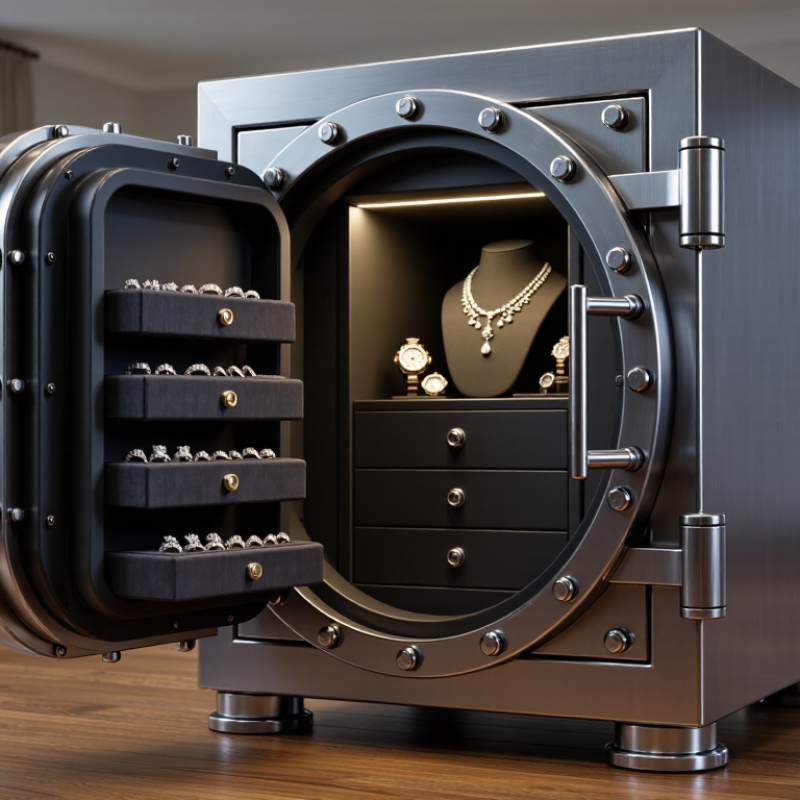
In 2026, a high-security jewelry safe is defined by layered protection, not a heavy door or impressive price. During a professional assessment, I look for independently tested burglary resistance, certified fire performance, and a body that resists drilling. The lock should use strong encryption, failed-entry delays, and a second opening method for emergencies. Convenience matters, but it must not weaken control.
A serious unit also needs internal organization. Soft-lined drawers prevent stones and metal settings from rubbing during daily access. Adjustable compartments keep necklaces separated and reduce pressure on delicate clasps. Humidity control deserves attention, especially in basements or coastal homes. A sealed door, monitored sensors, and a dependable backup power plan add practical resilience. Yet electronic features are not automatically safer. A forgotten battery can become an expensive inconvenience.
Pricing in 2026 may range from a few thousand dollars to far more, depending on size, certification, installation, and monitoring. A smaller certified safe can outperform a larger decorative model. Easy to overlook. Before buying, verify test documentation, anchoring requirements, service availability, and replacement costs. I would also question the marketing language. “Military-grade” sounds reassuring, but measurable standards matter more. The honest choice is not always the most expensive one.
Estimated 2026 purchase ranges and security characteristics for residential jewelry safes. Prices are typical market estimates in U.S. dollars before tax, delivery, installation, and customization.
| Security Tier | Estimated 2026 Purchase Price | Typical External Size | Approximate Weight | Core Construction | Locking and Access Features | Fire Protection | Recommended Use |
|---|---|---|---|---|---|---|---|
| Enhanced Residential | $800–$2,000 | 18–30 in. high × 16–22 in. wide × 16–20 in. deep | 150–350 lb | Steel body with reinforced door, concealed hinges, and basic anti-pry protection | Electronic keypad or mechanical combination lock; relocker or tamper-lockout feature may be included | Usually 30–60 minutes of rated fire protection | Small jewelry collections, documents, and occasional home use |
| High-Security Residential | $2,000–$6,000 | 24–42 in. high × 20–28 in. wide × 18–24 in. deep | 300–800 lb | Thicker steel, multi-point locking bolts, hardened drill-resistant areas, and stronger door frame | UL-listed or similarly tested electronic or mechanical lock; independent relocker and audit capability may be available | 60–120 minutes, depending on the model and test rating | High-value jewelry stored in a primary residence or private office |
| Premium Burglary-Resistant | $6,000–$15,000 | 30–54 in. high × 24–34 in. wide × 20–30 in. deep | 700–1,500 lb | Composite or laminated barrier materials, hardened steel plates, protected boltwork, and substantial anti-drill construction | High-grade mechanical or electronic lock, glass or thermal relocker, time-delay option, and dual-control capability | 60–120 minutes where a fire rating is specified; burglary and fire ratings should be checked separately | Collections with substantial replacement value and frequent access requirements |
| Commercial-Grade High Security | $15,000–$40,000+ | 36–72 in. high × 30–48 in. wide × 24–36 in. deep | 1,200–3,500+ lb | Heavy composite barrier, multiple layers of steel and protective material, reinforced body, and robust anchoring points | Certified high-security lock, dual authorization, time lock or time delay, alarm interface, and detailed access records | May be separately specified; fire protection is not automatically implied by a burglary rating | Very high-value collections, professional operations, and locations requiring documented controls |
| High-Security Feature to Verify | What It Means in Practice | Why It Matters for Jewelry | Typical 2026 Cost Impact |
|---|---|---|---|
| Independent Burglary Testing | The safe has been evaluated against defined attack methods rather than relying only on a manufacturer claim. | Provides a more meaningful basis for comparing resistance to forced entry, drilling, cutting, and prying. | Often adds $1,000–$8,000 or more to the purchase price |
| Hardened Drill-Resistant Protection | Critical areas around the lock and boltwork use hardened steel, carbide, or composite barriers. | Jewelry safes are frequently targeted through the lock area, making localized protection important. | Usually included in higher-security models; may add $500–$3,000 |
| Multi-Point Locking Bolts | Bolts secure several sides of the door instead of relying on a single latch point. | Improves resistance to prying and door-frame attacks. | Common in $2,000+ models; premium systems may add $500–$2,500 |
| Relocker System | A secondary mechanism blocks the boltwork if the lock, door, or protected area is attacked. | Helps prevent entry after destructive attacks on the primary lock. | Typically adds $500–$3,000 |
| Anchoring and Installation | The safe is secured to structural concrete, masonry, or suitable floor framing by qualified installers. | Weight alone is not a complete security solution; anchoring reduces removal and tipping risks. | $300–$2,500, depending on weight, location, and floor conditions |
| Alarm and Monitoring Integration | Door contacts, vibration sensors, duress functions, or access events connect to a security system. | Adds detection and response if an attacker reaches or opens the safe. | $300–$2,000 for hardware and installation, excluding monitoring fees |
| Humidity Management | Interior ventilation, a low-temperature dehumidifying device, or monitored humidity control helps manage moisture. | Protects precious metals, gemstones, papers, watch components, and leather-lined presentation cases. | $100–$800 for equipment and accessories |
| Interior Jewelry Organization | Adjustable trays, watch cushions, ring rolls, drawers, and non-abrasive lining maximize usable capacity. | Reduces scratching, tangling, impact damage, and wasted internal space. | $250–$2,500 depending on the interior configuration |
Budget guidance: For a high-security residential jewelry safe in 2026, a practical planning budget is approximately $3,000–$8,000 before delivery and installation. For exceptionally valuable collections, the correct budget should be based on the collection's replacement value, insurance requirements, location risk, anchoring conditions, and independently verified burglary performance—not size or weight alone.
Choose adjustable drawers and soft linings for small heirlooms. Watches need separate cushions and bracelet clearance. Larger pieces need vertical space. I once chose excessive depth. Items vanished at the back. That was poor planning.
Consider a certified burglary-resistance rating, dependable locking system, and anchored installation. Match protection to the collection’s value and access needs. Certification is useful, not magical. It cannot promise total protection.
Measure doorways, stairways, and the final location before purchase. A very heavy safe may require structural review. Professional delivery and installation can cost $500 to $2,500. Guesswork is risky.
Not automatically. Check the tested internal temperature and protection duration. Heat ratings may protect papers better than certain gemstones or metals. Ask a qualified technician for plain explanations. I would question vague claims.
Place a small hygrometer inside or nearby. It can reveal damp conditions before tarnish becomes visible. Keep electronic backup instructions securely stored. Electronics can fail.
Leave room for future purchases. Overloading encourages careless stacking and hides small pieces. Keep separation around watches, bracelets, and delicate settings. Empty space helps inspection.
Ask your insurer for written requirements before buying. Some policies limit jewelry theft coverage near $1,500. Scheduled coverage can require appraisals, receipts, photographs, and separate endorsements. Never assume a safe guarantees a discount. Confirm it directly.
Test batteries, inspect hinges, and update access records regularly. Maintain an inventory after major changes. Include clear photographs and purchase documents. A smaller, anchored safe may outperform a larger, casually installed one. That feels uncomfortable, but it matters.
How much should I spend on a high-security jewelry safe? In 2026, the answer depends on the value of your collection, the level of protection required, and the environment where the safe will be installed. A high-security jewelry safe typically combines strong construction, reliable locking technology, fire and moisture resistance, organized interior storage, and features that help resist unauthorized access. Prices can range from several hundred dollars for basic protection to several thousand or more for advanced security, enhanced fire resistance, custom interiors, and professional installation.
Before buying, compare the safe’s security level with the value and size of your jewelry collection rather than choosing by price alone. Consider additional expenses such as delivery, anchoring, installation, maintenance, insurance requirements, and future capacity. A properly installed safe with durable materials and useful organization can provide stronger long-term value, reduce storage risks, and support responsible protection of your jewelry as your collection grows.
