RVault Box
Choosing a cheap digital safe in 2026 requires more than comparing prices, keypad styles, and advertised steel thickness. The real question is simple: Can burglars easily crack a cheap digital safe? Evidence from the FBI Crime Data Explorer shows that burglary remains a recurring property-security risk, even when local rates differ. UL Solutions’ safe-testing guidance also reminds buyers that visible features do not prove resistance to forced entry, fire, or manipulation. A low price can be reasonable. It can also hide weak hinges, poor locking bolts, or unreliable emergency overrides.
Security researcher Marc Weber Tobias has warned, “There is no such thing as an impenetrable safe.” That sentence matters. A safe is a delay device, not a magic shield. A budget model with a thick door, protected boltwork, a tested lock, and clear certification may protect passports, cash, and backup drives effectively. A flimsy box with a bright keypad may only create confidence. That is uncomfortable, but useful.
Look closely. Does the door flex? Are the hinges exposed? Does the manufacturer publish independent test results? Is the backup key cylinder cheaply installed? The answers often matter more than a discount sticker. Industry guidance from UL Solutions and burglary data from the FBI support a practical approach: assess the threat, verify the construction, and avoid trusting vague security claims. This article examines affordable options without pretending every cheap safe is equally secure. Some recommendations may still need rethinking as attack methods and product designs change.
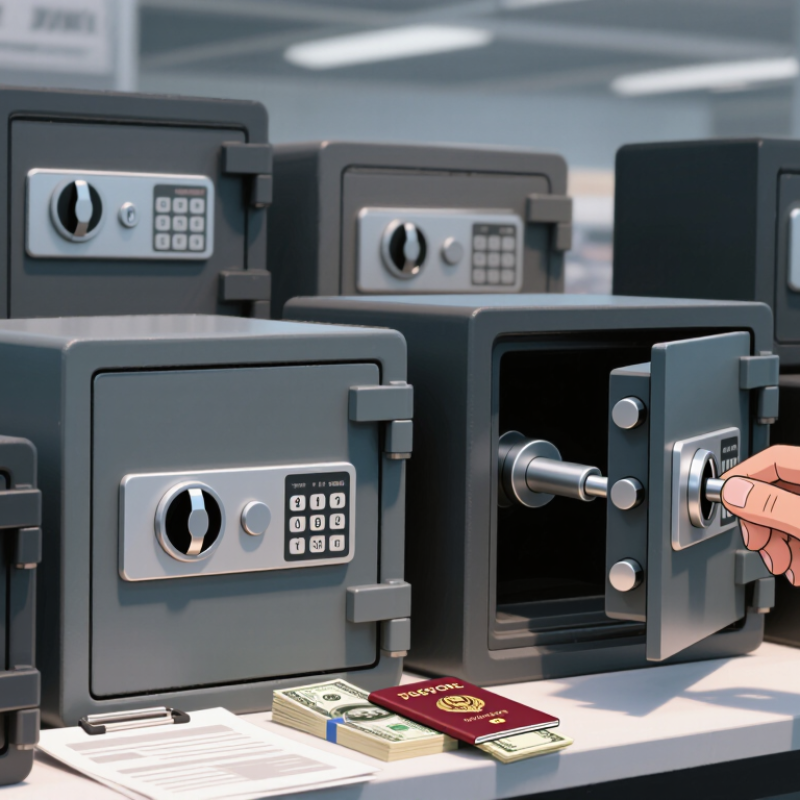
How to Choose a Cheap Digital Safe Securely?
Define the Security Needs and Budget for a Digital Safe
Start with what you need to protect. A small digital safe may hold passports, certificates, backup drives, or emergency cash. Measure the largest item, then add room for future storage. Do not pay for features you will never use. However, a very low price can hide thin steel, weak hinges, or unreliable locks.
The Verizon 2024 Data Breach Investigations Report analyzed 30,458 security incidents and 10,626 confirmed breaches. It shows why access control still matters, even at home. Choose a safe with a concealed hinge, a tested locking mechanism, and clear low-battery warnings. A manual override should exist, but it must remain secured and documented. Check whether the safe meets recognized standards, such as EN 14450 or UL 1037, where applicable. Certification is more meaningful than impressive product language.
Set a practical budget after listing the risks. For occasional document storage, a basic certified safe may be enough. For frequent access, choose stronger construction and a better keypad. Mounting matters too. A heavy safe can still be removed if it sits unsecured in a cupboard. Place it away from moisture and obvious viewing areas. I would not trust fingerprint access alone; sensors can fail, especially after long storage. Keep fresh batteries nearby, but not inside the safe. Test the code, override method, and mounting points before storing anything important. Cheap can work. Careless selection cannot.
Use the protection priority to set a realistic budget before comparing models. Basic document storage usually requires a lower budget, while burglary resistance, fire protection, and higher-security construction increase the expected cost. These broad planning ranges are indicative market estimates in U.S. dollars, not fixed quotations.
2026 How to Choose a Cheap Digital Safe Securely?
A cheap digital safe should balance lock type, steel strength, size, and practical security features. Keypad locks are usually affordable and simple to operate. Choose one with a low-battery warning and a protected emergency power connection. Biometric locks offer quick access, but budget sensors can reject fingers after washing or minor cuts. A backup key can help, yet it creates another security risk if stored carelessly. Test the keypad several times before installation.
Material matters more than glossy panels. Look for steel construction, a thick door, concealed hinges, and solid locking bolts. A narrow door gap is useful because pry tools need less space. Check the door. Some inexpensive models use thin steel with a heavier-looking front panel. That difference is easy to miss in product photos. Ask for verified specifications, independent test information, and clear warranty terms. Marketing language is not proof.
Choose a size that fits your documents without leaving excessive empty space. Measure twice. A compact safe may be easier to hide, but it can be easier to remove. Pre-drilled mounting holes and suitable floor or wall anchors improve resistance to carrying away. Place it away from moisture and direct heat. Fire protection claims should include a tested rating, not only vague phrases. A tamper alarm, failed-entry lockout, internal light, and audit history add useful protection. Still, cheap electronics can fail. Replace batteries on a schedule and keep recovery instructions secure. No affordable safe is completely attack-proof.
A cheap digital safe should still show credible security evidence. The FBI’s 2023 Crime Data Explorer estimated 847,522 burglary offenses in the United States. Certification matters because steel thickness alone proves little. Check for standards such as EN 14450 or EN 1143-1. Verify the certificate number with the testing organization. A vague “high security” label is not enough. Cheap can still be carefully chosen.
Battery backup deserves equal attention. A keypad safe may fail after low batteries, especially in a cold cupboard. Choose a model with an external emergency power contact or clearly documented battery access. Avoid units that require permanent online access. The 2024 Verizon Data Breach Investigations Report found that human involvement appeared in 68% of breaches. That finding concerns digital systems, but it also supports a simple rule: fewer unnecessary connections mean fewer points to manage. Emergency keys should be sealed, separately stored, and tested occasionally. This part is easy to overlook.
Tips: Test the keypad with fresh batteries before storing valuables. Ask whether the lockout delay can be reset. Check the hinge side, mounting holes, and fire rating. The NFPA reports that U.S. fire departments responded to about 1.5 million fires in 2023, so a theft rating is not a fire rating. I once thought a heavier door meant better protection; that assumption was too simple. Check the documents, not just the weight.
A cheap digital safe can protect documents, cash, and personal records, but price alone proves little. Check the installation method before buying. A safe should anchor firmly to concrete or solid timber, not rest loosely inside a wardrobe. Measure the door swing, battery access, and emergency key storage. I once saw a compact safe become useless because its keypad faced a wall.
Fire and water resistance require careful reading. Look for tested protection times and temperature limits, not vague claims such as “fireproof.” Paper, digital media, and photographs need different protection levels. Water resistance also varies. A door seal may block splashes, yet fail during prolonged flooding or fire-hose exposure. Cheap models can hide weak hinges, thin steel, or exposed reset buttons. Inspect screw covers, override locks, and battery compartments. These areas often reveal weaknesses.
Tips: Test the keypad repeatedly before installation. Use fresh batteries and record the replacement date. Keep the backup key outside the safe, but not in an obvious drawer. Change the factory code immediately. Avoid entering the code while people watch. Check whether the safe logs failed attempts or locks temporarily after repeated errors. A simple flashlight can reveal gaps around the door. Do not ignore small defects; they may become serious during heat, moisture, or forced handling. No safe is perfect. Recheck it every few months.
How to Choose a Cheap Digital Safe Securely in 2026
A cheap digital safe can look convincing online, but seller reliability deserves more attention than the lowest price. Check the seller’s contact details, registration information, return address, and recent customer feedback. Reviews should mention keypad response, battery access, delivery packaging, and support after purchase. Generic praise is less useful. Ask one practical question before ordering, such as how forgotten codes are handled without damaging the safe. A clear, written reply reveals more than polished product photos.
Read warranty terms as carefully as the locking instructions. Confirm coverage for the electronic keypad, motor, wiring, corrosion, and shipping during repairs. Some low-cost warranties cover parts but exclude labor or return transport. That detail can turn a bargain into an expensive inconvenience. Save the invoice, serial number, manuals, and support messages in one folder. Overlooking a short warranty period is an easy mistake; later support can become difficult.
Long-term maintenance is part of the price. Choose a model with accessible batteries, clear low-power warnings, and replaceable components. Test the keypad monthly with the door open, and inspect hinges for dust or misalignment. Keep emergency power instructions available, but never store access details beside the safe. A dry interior and stable room temperature can reduce corrosion. Do not assume cheap means fragile, yet do not assume a warranty replaces maintenance. That distinction matters.
| Evaluation Dimension | Reliable Evidence to Check | Practical Benchmark for a Budget Safe | Warning Signs | Recommended Action |
|---|---|---|---|---|
| Seller identity | Legal business name, physical contact details, customer-service email, return address, and consistent information across the store and payment page. | All seller details are visible before payment and can be independently verified. | Only a messaging-app contact, no return address, copied product descriptions, or recently created sales page. | Save screenshots of the listing, specifications, policies, and seller contact information before ordering. |
| Independent customer feedback | Recent reviews from verified purchases, detailed photographs, delivery comments, and repeated feedback over several months. | Look for consistent comments about delivery, lock operation, missing parts, and after-sales support rather than relying only on star ratings. | Large numbers of identical reviews, unusually short review history, or reviews discussing a different product. | Compare feedback across at least two independent platforms and give more weight to detailed low- and mid-rating reviews. |
| Product specifications | External dimensions, internal dimensions, net weight, steel thickness, bolt diameter, power source, and mounting-hole details. | The listing provides both external and internal measurements and states whether dimensions include the keypad or handle. | Only approximate dimensions, no internal capacity, unexplained weight, or claims such as “unbreakable” without test evidence. | Check whether the safe will fit the intended location and whether its weight and mounting method are suitable for the building. |
| Lock quality | Clear information about keypad behavior, emergency access, lockout timing, battery location, and mechanical override procedure. | A low-cost electronic lock should have a visible low-battery warning, a defined temporary lockout function, and documented emergency access. | A universal-looking override key, an emergency code that cannot be changed, no lockout after repeated attempts, or missing instructions. | Change the factory code immediately, store the emergency key separately, and avoid keeping the key inside the safe. |
| Security claims | Test standard, certificate number, test scope, issuing laboratory, and the exact model covered by the report. | Treat “anti-theft,” “high security,” and “fireproof” as marketing terms unless supported by a verifiable test report. | A badge or certificate image with no model number, test scope, date, or issuing organization. | Request the complete report or certificate and confirm that it applies to the exact safe model, not merely to a lock component. |
| Fire protection | Fire-resistance duration, test temperature, protected media, and the applicable fire-test standard. | Many inexpensive safes provide limited heat protection; a stated fire rating should specify what was tested and for how long. | “Fireproof” with no duration, no test standard, or no information about paper, digital media, or other contents. | For important documents or digital media, choose a product with independently documented fire testing appropriate to the contents. |
| Warranty coverage | Warranty length, covered parts, labor terms, shipping responsibility, exclusions, registration process, and repair or replacement procedure. | The policy clearly covers the electronic lock and provides a written process for defective components during the stated period. | “Lifetime warranty” with no terms, customer-paid international return shipping, or exclusions covering nearly every failure. | Download or save the warranty before purchase and confirm who pays shipping for a failed lock or keypad. |
| Return and refund policy | Return window, restocking fee, condition requirements, refund timing, and treatment of damaged or oversized shipments. | The return period is stated in calendar days and includes a clear process for reporting transit damage. | Returns accepted only unopened, no damage-report deadline, unclear refund method, or return shipping costing more than the safe. | Inspect the carton before signing when possible, photograph damage immediately, and retain packaging until the safe is tested. |
| Payment protection | Secure checkout, itemized order confirmation, delivery tracking, and a payment method with a formal dispute process. | Use a payment method that provides transaction records and buyer-dispute procedures; avoid direct bank transfers to unknown sellers. | Requests for cryptocurrency, gift cards, off-platform payment, or urgent payment outside the normal checkout. | Keep invoices, messages, tracking records, and product screenshots until the return and warranty periods have ended. |
| Installation and anchoring | Number and position of mounting holes, supplied hardware, suitable floor or wall type, and installation instructions. | The safe can be anchored to a solid structure using appropriate hardware; anchoring is generally more important than cosmetic thickness for basic theft resistance. | No mounting holes, unsuitable hardware for the installation surface, or instructions that allow the safe to remain portable. | Anchor the safe according to the instructions or use a qualified installer, while checking for pipes, cables, and structural limitations. |
| Battery maintenance | Battery type, accessible battery compartment, low-battery alert, and whether the keypad retains the user code after battery replacement. | Use fresh, high-quality alkaline batteries when specified and replace them at least annually or when the low-battery warning appears. | No low-battery warning, sealed battery compartment, leaking batteries, or unclear reset procedure. | Test the lock with the door open after every battery change and never force the handle when the motor is unpowered. |
| Long-term serviceability | Availability of replacement keypad, solenoid or motor assembly, keys, hinges, door seals, and written instructions. | The seller can identify replacement parts and service contacts beyond the initial return period. | The entire safe must be replaced for a failed keypad, or replacement parts are available only through an unverified third party. | Ask about replacement-part availability before purchase and record the model number and serial number securely. |
| Delivery and packaging | Product weight, parcel dimensions, carrier method, tracking, signature requirements, and packaging protection. | The package has sufficient cushioning and clear instructions for reporting concealed damage after opening. | No tracking, unexplained freight surcharges, damaged cartons, or a product weight that appears inconsistent with the listing. | Photograph the unopened carton, inspect hinges and door alignment, and test the keypad before anchoring the safe. |
| Total cost of ownership | Purchase price, delivery, taxes, mounting hardware, batteries, possible installation, returns, and replacement-lock costs. | Compare the complete delivered cost rather than the advertised product price alone. | A very low headline price followed by high shipping, mandatory accessories, or expensive return freight. | Choose the lowest total-cost option that still provides verifiable specifications, usable warranty coverage, and a practical repair path. |
A keypad lock is usually affordable and simple to operate. Choose low-battery warnings and protected emergency power access. Test the keypad before installation.
They provide quick access, but budget sensors may reject wet fingers or minor cuts. Keep a secure backup method. Do not store it beside the safe.
Look for steel construction, a thick door, concealed hinges, and solid locking bolts. Inspect the door, not only the glossy front panel. Thin steel can hide behind attractive photos.
Measure your documents twice before ordering. Choose enough space for papers without leaving a large empty cavity. A compact safe may hide more easily, but it can also be carried away.
Yes. Pre-drilled holes and suitable floor or wall anchors can reduce removal risks. Confirm the mounting surface is strong enough. Installation is easy to underestimate.
Look for a tested fire rating with clear conditions and duration. Vague phrases are not proof. I might trust polished wording too quickly.
A tamper alarm, failed-entry lockout, internal light, and access history can help. Cheap electronics may still fail. Replace batteries on a regular schedule.
Check contact details, return information, recent reviews, and repair support. Ask how forgotten codes are handled. Confirm coverage for electronics, corrosion, labor, and return shipping.
Test the keypad monthly while the door remains open. Inspect hinges for dust or misalignment. Keep the interior dry, replace batteries, and store recovery instructions securely.
Choosing a cheap digital safe securely begins with defining what you need to protect, your available budget, and the level of risk in your environment. Compare keypad, biometric, and mechanical override systems, while examining steel thickness, internal space, locking bolts, tamper alarms, and pry-resistant construction. Ask, “Can burglars easily crack a cheap digital safe?” The answer depends less on price alone than on its design, build quality, installation, and maintenance. Look for independent safety certifications, dependable battery backup, and controlled emergency access that will not create an obvious weakness.
Before buying, evaluate whether the safe can be securely anchored, and check its claimed fire and water resistance under realistic conditions. Consider hidden vulnerabilities such as exposed hinges, weak mounting points, predictable override procedures, or poor code management. Purchase from a reliable seller that provides clear specifications, responsive support, a practical warranty, and replacement parts or service guidance. Regularly test the batteries, inspect the lock and mounting hardware, update access codes when appropriate, and keep the safe discreetly positioned to improve long-term protection.
