RVault Box
When considering how to bolt a safe to a concrete floor, many homeowners feel overwhelmed. With rising concerns about security, it is essential to take the right steps to protect your valuables. John Doe, a renowned locksmith with over a decade of experience in the industry, states, “Securing a safe properly is the first step toward ensuring its effectiveness.”
Bolding a safe correctly not only protects your belongings but also deters potential burglars. Installation can seem daunting, but with the right tools and techniques, it becomes manageable. Begin by selecting the right location. Consider factors like accessibility and visibility. Concrete floors are solid bases, providing the stability needed for a safe.
Many homeowners underestimate the importance of drilling precision and anchor selection. Mistakes in these areas can lead to ineffective security measures. Reflect on your approach and be willing to adjust as needed. Understanding the nuances of how to bolt a safe to a concrete floor will result in a more secure environment for your treasured items.
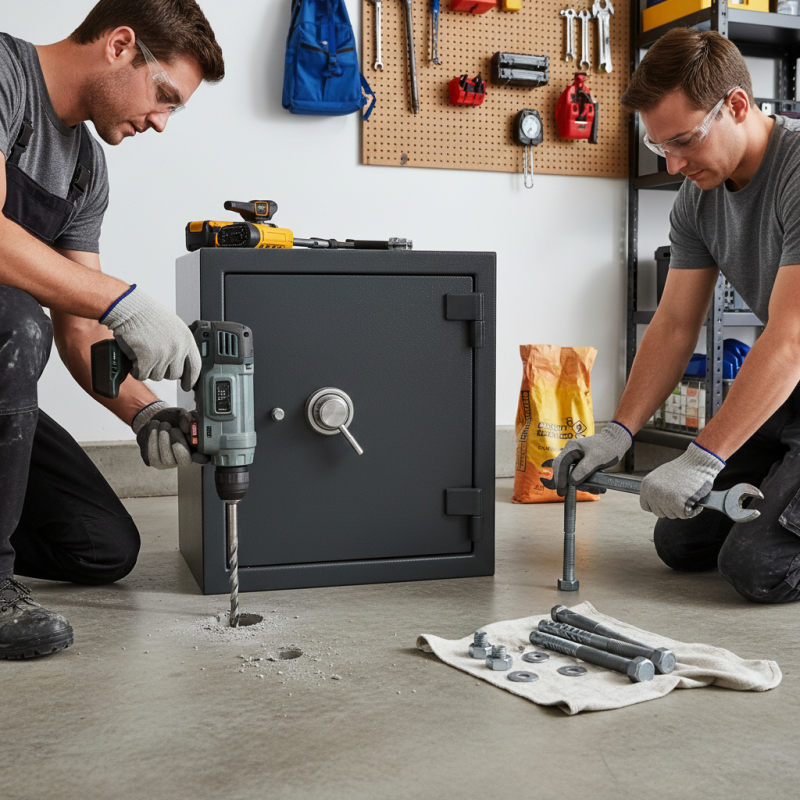
Choosing the right location for your safe installation is crucial for security and accessibility. Start by selecting a spot that is not easily visible to intruders. Ideally, place it in a room that is less frequented. An attic or basement might be ideal, as they are typically out of sight. Ensure that the area is dry and has no moisture issues to prevent damage.
Consider environmental factors as well. Avoid locations near windows or doors. Thieves can easily gain access to safes in such areas. Check for nearby electrical outlets, as you may need power for electronic locks. Keep in mind the weight of the safe and the strength of the concrete floor. Ensure that the surface is level for a stable installation.
Accessibility is another important aspect. You should be able to open the safe easily without obstructions. Yet, you don’t want it to be too convenient for others. This balance is often difficult to achieve. Think about how often you will need to access the safe. It’s a challenge to find a spot that fulfills all these criteria. Testing different locations in your home can lead to valuable insights.
When bolting a safe to a concrete floor, gathering the necessary tools and materials is crucial. Start with high-quality bolts, rated for concrete use. According to industry guidelines, hardened steel bolts provide superior strength and resistance against tampering. You'll also need a hammer drill with a masonry bit, as standard drills won't penetrate concrete effectively.
Safety gear is essential during this process. Use eye protection to shield against dust and debris. Ear protection is recommended, especially when using power tools, as the noise can be damaging over time. Reports indicate that improper use of tools results in injuries, emphasizing the importance of safety measures.
Beyond tools, consider the material used for securing the safe. Epoxy adhesives can enhance bond strength, particularly in high-security installations. However, not every adhesive performs equally under stress. Research shows that temperature fluctuations can weaken certain epoxies. Ensure you're selecting a product designed for harsh environments when planning your installation.
Marking and drilling holes in a concrete floor is a crucial step in securing a safe. Accurate placement of marks ensures that the safe is bolted where it provides the most stability. According to industry experts, improper alignment can reduce the security of your safe by nearly 40%. Adequate preparation helps avoid costly mistakes.
Begin by using a pencil or chalk to mark the hole locations directly through the safe's mounting holes. Ensure your marks are clear and visible. The diameter of the hole should correspond to the anchors you'll be using. Typically, a ½ inch hole should suffice for most heavy-duty anchors. If the concrete surface appears cracked or uneven, consider addressing these issues before drilling.
When it's time to drill, choose a high-quality hammer drill with a carbide-tipped bit. Industry reports indicate using the correct tools can streamline the drilling process and enhance precision. Drilling at a slow speed with steady pressure allows for better control and helps avoid damage to the bit. One common oversight is rushing through this stage, leading to misaligned holes. Taking time during this process is key to ensuring strong and secure anchorship for your safe.
Securing a safe to a concrete floor is crucial for protecting your valuables. Using the right bolts and anchors is essential. According to a recent security report, about 30% of thefts involve stealing safes. This emphasizes the importance of proper installation.
When you begin, choose high-quality concrete anchors. Expansion anchors or wedge anchors are often recommended. They provide a strong hold. Always drill pilot holes at least ¼ inch wider than the anchor diameter. This ensures a snug fit and supports the safe's weight. For optimal security, use a drill with a masonry bit to penetrate the concrete effectively.
After installing the anchors, it is vital to use high-grade bolts. They should have a tensile strength of at least 8,000 psi. Once secured, the safe should not wobble or shift. This reflects proper installation. However, if you notice movement, it's a sign to reassess your work. A loose anchor can compromise security, making the safe vulnerable. This reality highlights that installation requires attention to detail.
After bolting a safe to a concrete floor, testing its stability is crucial. You want to ensure that it withstands tampering and potential theft. Start by checking the bolts. They should be tight and secure. Loose bolts can compromise the entire installation. A simple visual inspection may not be enough.
Next, try pushing or pulling on the safe from different angles. It should remain motionless. A safe that shifts even slightly indicates a need for better anchoring. Use a level tool to ensure it's even. An uneven setup can lead to stress on bolts and affect performance. Don't overlook this detail.
Consider performing a weight test. Place items inside the safe to see how it holds up under weight. If it wobbles, reassess your installation. Stability can make a significant difference in security. Always prioritize safety and reliability with your setup. Regular checks can prevent future issues.
: Look for spots that are not visible to intruders. Attics or basements are good options.
The floor needs to be strong enough to support the safe's weight. A level surface is essential.
Choose a location that is accessible but not too convenient for others. Balance is important.
Use high-quality concrete bolts and a hammer drill with a masonry bit. Safety gear is essential too.
Use a pencil or chalk to mark directly through the safe's mounting holes for precision.
Address the cracks before drilling. A stable surface is crucial for security.
Epoxy adhesives are strong, but ensure they can withstand temperature changes and harsh conditions.
Drill at a slow speed with steady pressure for better control and to avoid damaging the bit.
Misalignment can reduce your safe's security by nearly 40%. Take time and focus on accuracy.
Rushing the drilling process can lead to misaligned holes. Patience is key for a secure installation.
When considering how to bolt a safe to a concrete floor, selecting the right location is crucial. The installation area should be discreet yet accessible, ensuring convenience while maintaining security. Once the location is determined, gathering the necessary tools, such as a drill, bolts, and anchors, is essential for a smooth installation process.
The next steps involve marking and drilling holes in the concrete floor, followed by securing the safe with appropriate bolts and anchors to ensure it remains firmly in place. Finally, testing the stability of the bolted safe is vital to confirm that it can withstand attempts at unauthorized removal. Following these tips will help ensure that your safe is securely installed, providing peace of mind.
